
by davemacq
Share
by davemacq
Share
 After a lot of work, I now have this blog set the way I want (mainly). The process has been deeply frustrating, reminiscent of Sometimes I Hate Technology, and illustrative of how I burnout — over-invested in life being the way I want to be, as compared with how it is.
Burnout. A common phenomenon about which much has been written, but what is it really? It is actually quite simple to describe, and often difficult to resolve, as I well know from my own personal experience (which I will describe shortly).
Burnout occurs when I am overly invested in outcomes I cannot control — sooner or later, I become exhausted, and I call it burnout. Burnout therefore is a measure of the extent that I have not accepted my own powerlessness in life.
What I can control
There are certain things I can control: with discipline, I can control my own behaviors. To a limited extent, I can control my own thoughts and emotions. That is about it. That is actually a lot, because thereupon I can influence others, and I can modify situations. What I cannot control is what other people think, feel, and do in response to me. As noted, I can influence these aspects of life, but after 25 years as a therapist, I am very aware that I cannot consistently and repeatedly get others to do what they do not want to do — I get resistance, and I get sabotaged. And as a result, I eventually get exhausted.
Especially in the nature of global warming, the incidence of burnout will be high. The dominator forces that have created this dilemma are so powerful and so ingrained in our species that it is very easy to get caught in wanting the problem to be solved. And it is the nature of super-wicked problems that every step forward seems to be followed by two steps backwards.
Effective Leadership
So what is the resolution that is needed? Effective leadership — effective leadership of myself by myself, and to the extent that I can influence others, effective leadership of others by me. One of the books that made this clear for me was Leaders: Strategies for Taking Charge by Bennis and Nanus. They listed four characteristics of good leaders:
- they create attention through vision, their own vision of where the group is to go;
- they create meaning through communication — they frame their vision in a compelling fashion, attracting and enlisting the support of followers;
- they create trust through positioning — they persist in their vision despite the sabotage that [always] occurs; and
- they lead others — they manage themselves, through focus on the positive aspects that they either can control, or can generate within themselves.
From another sources (The Success Principles), Canfield describes this succinctly as
High intention, low attachment.
I’ll have more to say in Part 2.
Bennis, W., & Nanus, B. (1985). Leaders: Strategies for taking charge. New York, NY: HarperCollins Publishers.
Canfield, J., & Switzer, J. (2005). The success principles: How to get from where you are to where you want to be. New York, NY: HarperCollins Publishers.
STAY IN THE LOOP
Subscribe to our free newsletter.
Leave A Comment

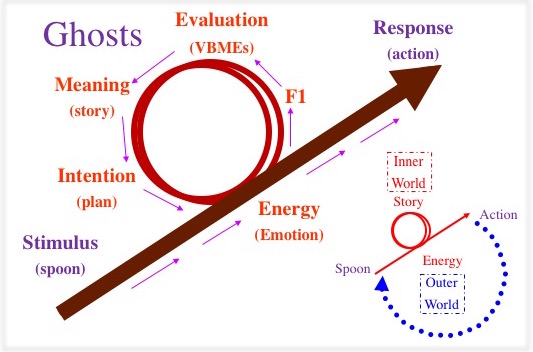
Everyone struggles with ghosts, usually the residue of our childhood or other significant emotional traumas. These are resolvable — if we will do the work. In my case, the ghost has been the disappointments wherein I have attempted to promote myself, either
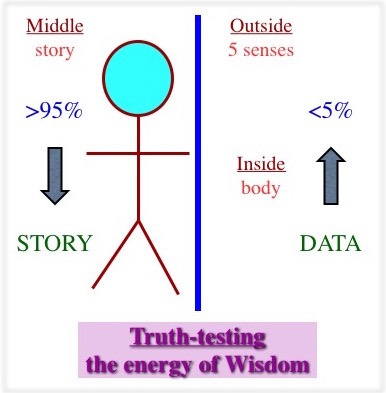
In my last post, I talked about awareness as the essential principle of Gestalt Therapy. Here I want to pick up on two other equally important principles of Gestalt: Contact and Personal Responsibility. I do this because my principal orientation is that
I will be taking a break for a couple of weeks from posting to this blog; I will be in the mountains of Washington State for a week (without internet connection) and then going to Ontario for a couple of weeks —

“Burnout therefore is a measure of the extent that I have not accepted my own powerlessness in life” wow- what great insight! This article is incredibly profound and helpful. High intention, low attachment. It reminds me of one of my favorite professors teaching on parenting- to parent with “benevolent disinterest”. Live with love and intention but low attachment to outcomes. Thanks Dave.
Thanks, Don. Good confirmation of my thoughts.