
by davemacq
Share
by davemacq
Share
 The week has been busy — lots of little jobs, and also I have been having difficulty organizing a workshop I will be doing (in October) on relationship. I am taking an older workshop, one that I have never been fully satisfied with, and both reducing it in size (for a full weekend to 1½ days). Such a reduction is always difficult for me, and more so this time as I have been searching for how to focus the workshop in a way that satisfies me. What I have settled upon, and which satisfies me, is to emphasize the importance of intersubjectivity.
Intersubjectivity is a concept I learned from my research advisor Christian deQuincey when I was doing my PhD. To quote one of Christian’s books (Radical Knowing: Understanding Consciousness Through Relationship, 2005):
Intersubjectivity is “knowing through relationship” — a form of non-sensory, non-linguistic connection through presence and meaning, rather than through mechanism or exchanges of energy. (Kindle location 452)
Christian also distinguished three forms of intersubjectivity:
- Intersubjectivity-1, the exchange of linguistic tokens (words and other sounds),
- Intersubjectivity-2, where we influence each other with the meaning we promote, and
- Intersubjectivity-3, where we co-create each other into a meaningful experience by the wholeness of who we each are.
For me, when I experience it, intersubjectivity-3 is the richest form of dialogue of which I have experienced.
So the workshop is becoming a process whereby we (myself and the participants) explore how to have a really great relationship. In essence then, for a given relationship, to what extent are we willing
- to be authentic with each other,
- to support each other to be the person we each want to be (as opposed to who we should be for the other , or for society),
- when difficulties arise in the relationship (inevitable), to explore the difficulty with total honesty.
Hard work, requiring that we love ourselves as well as our partner, and that we define the truths by which we each stand (or fall). The most important place for learning about life, provided we have ways to sort the complexity.
One component of this is what the Family Therapist Murray Bowen called self-differentiation — the consistent ability to be a self while in the presence of others. Amongst his other contributions, Bowen developed a scale for self-differentiation, ranging from 0 to 100. He believed most people scored around 40, and that no one ever scored above 70 — it is simply too difficult to stay separate from the influence of others (we are not designed to do so).
Anyway, the workshop is looking interesting.
Other issues of note for the week, both on climate issues:
The Planet Is Warming. And It’s Okay to Be Afraid (20170717)
Last week, I listed The Unhabitable Earth, an article that discussed the worst case scenario of what we face, indicating how close it comes to doom-mongering (worst case scenarios are usually very challenging). This link (The Planet Is Warming . . .) is an excellent response to the concern re doom-mongering in regards to global warming — unfortunately, if we are to respond effectively, we each need to deal with our despair. Not fun, but necessary.
A Brief History of the Straw (20141023)
Plastic straws suck (20170720)
Two interesting links to the impact of plastic straws, the first on our creativity, the second on our ecology. Apparently we discard 180,000,000,000 straws a year (1,400,000 kilograms a year, 500,000,000 a day) to landfill and other forms of discard. I deliberately changed the data from 180 billion to 180,000,000,000 to emphasize the impact. And that is just drinking straws!
STAY IN THE LOOP
Subscribe to our free newsletter.
Leave A Comment

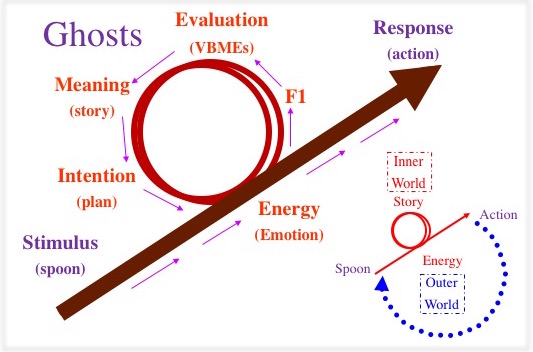
Everyone struggles with ghosts, usually the residue of our childhood or other significant emotional traumas. These are resolvable — if we will do the work. In my case, the ghost has been the disappointments wherein I have attempted to promote myself, either
In my last post, I talked about awareness as the essential principle of Gestalt Therapy. Here I want to pick up on two other equally important principles of Gestalt: Contact and Personal Responsibility. I do this because my principal orientation is that
I will be taking a break for a couple of weeks from posting to this blog; I will be in the mountains of Washington State for a week (without internet connection) and then going to Ontario for a couple of weeks —