
by davemacq
Share
by davemacq
Share
 I said in my last post that I would consider the possibility of a coup. At some level, I truly accept that the need for a coup is the only way in which humanity will survive. I’m not a historian, nor a philosopher, nor do I have a military background, so what follows will simply be my random thoughts regarding the issues that confront us as a civilization.
First, as noted in my original first post of this blog (see my home page), Laszlo (in Evolution: The General Theory, 1996) wrote that we are in a cascade of crises, and that we must extend ourselves into a new maturity, else we will likely perish as a species (or at least as a civilization). I also recall from my PhD research, Toynbee in A Study Of History (1946) considered that in the failing of civilizations, new ones arise at the periphery (of the old collapsing civilization) wherein a small group arises who both represents a new energy of purpose while espousing a new religion, meanwhile opposed by the old tyranny. In my dissertation, I suggested that the small group was the Cultural Creatives and the new religion was our maturing relationship with ecology. The current difficulty with both the Cultural Creatives and the ecology movement, though, is that they are disorganized, and do not present a coordinated front to oppose the oppressive forces of our current civilization. Furthermore, this past century is the first occurrence in which we as a species have come to be both a global village and a power dynamic capable of altering the dynamics of the entire ecosystem of our world; there is essentially no periphery for a new civilization — we must confront the center of the old.
I also noted in my posts about power (beginning 2016-08-16) that civilization(s) arose because the human species came into relationship with power, a relationship different from that of all other previous species. Schmookler in The Parable Of The Tribes[1] indicated that “our destructiveness as a species and of our current culture . . . is a simple consequence of our creativity, a tragedy representative of the inevitable options for power” — and that there is “no way to return the dangerous djinni of human power back into the bottle.” In addition, “The laws of man require power, for power can [only] be controlled with power. The challenge is to design systems that use power to disarm power. Only in such an order can mankind be free.” Perhaps mankind will evolve to “control the actions of all to the degree needed to protect the well-being of the whole.”
Schmookler mentions a number of relevant definitions:
- system: an aggregate the elements of which interact (and therefore no element of the system can be understood in isolation)
- synergy: a pattern whereby each part functions in a way that enhances the welfare of the other parts as well as its own
- viability: the ability to maintain without diminution whatever it is upon which its continued existence depends
Our civilization is definitely a system, yet it is neither synergistic nor viable. Our civilization is based on power, not synergy and viability. We compete rather than cooperate. We control by short-term domination rather than by consideration of the long-term. We demonstrate immense creativity, but we do not consider the impact of our creativity on future generations (in either our consumerism or our technological advances).
To be continued
Links suggestive of our cultural insanity
Heartless world watches while Rohingya nightmare continues (20170928)
An example of the inability of our species to deal with power.
Trump doesn’t get it on Puerto Rico. He just proved it by lashing out at San Juan’s mayor. (20170930)
I am suggesting this link, not as a critique of Trump (which it is), but as an indication of the need for definitive action in stopping this kind of tribalism, a stance that likely results in major deterioration of justice and viability. The current system is not healthy.
Homeland Security to monitor social media accounts of immigrants and citizens (20170926)
Where does surveillance stop? When is it effective? Here we seem to be moving to a police state, again with a major deterioration of justice and vitality.
Even This Data Guru Is Creeped Out By What Anonymous Location Data Reveals About Us (20170926)
So easy, and with enough computer power, likely also easy to cross-map details of how groups of people interact. Truly, Big Brother is watching.
[1] Schmookler, A. B. (1995). Parable of the tribes: The Problem of Power in Social Evolution. New York, NY: State University of New York.
STAY IN THE LOOP
Subscribe to our free newsletter.
Leave A Comment

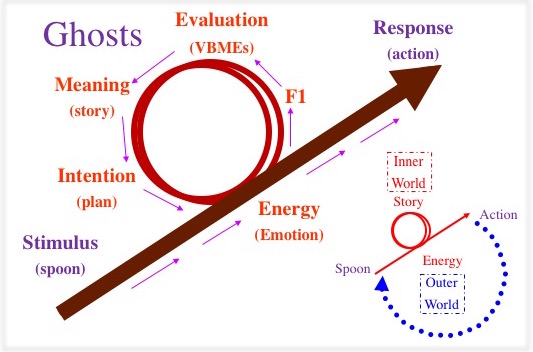
Everyone struggles with ghosts, usually the residue of our childhood or other significant emotional traumas. These are resolvable — if we will do the work. In my case, the ghost has been the disappointments wherein I have attempted to promote myself, either
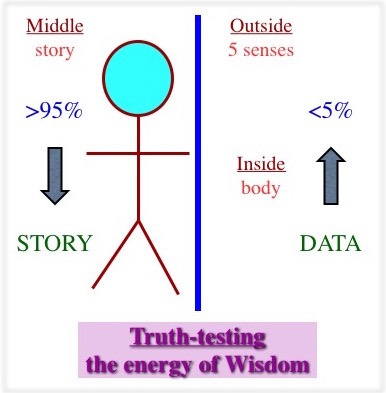
In my last post, I talked about awareness as the essential principle of Gestalt Therapy. Here I want to pick up on two other equally important principles of Gestalt: Contact and Personal Responsibility. I do this because my principal orientation is that
I will be taking a break for a couple of weeks from posting to this blog; I will be in the mountains of Washington State for a week (without internet connection) and then going to Ontario for a couple of weeks —